
Why be Catholic?
There are many things that we could say about the benefits of being Catholic. There are ways in which the Catholic Church has benefitted society, and ways in which it serves as a comfort to individuals within it. The Catholic Church has provided humanitarian aid in every part of the world and in every period in history; it has established educational institutions which have formed the minds of millions; it has been a patron of the arts and preserver of invaluable historical patrimony. Every day, millions of Catholics find community in their Churches, wisdom in the teachings presented there, stability and encouragement in a turbulent world.
But there are chiefly two reasons why anyone should be Catholic, and two reasons that stand out above all others. These two reasons are furthermore the greatest counterpoint to anyone who doubts that they ought to be Catholic, whether they are within the Church or without. No matter how doubtful one might be, no matter how horribly the members and even leaders of the Church might fail in giving witness to the Gospel, there are two reasons that remain as to why anyone should be Catholic.
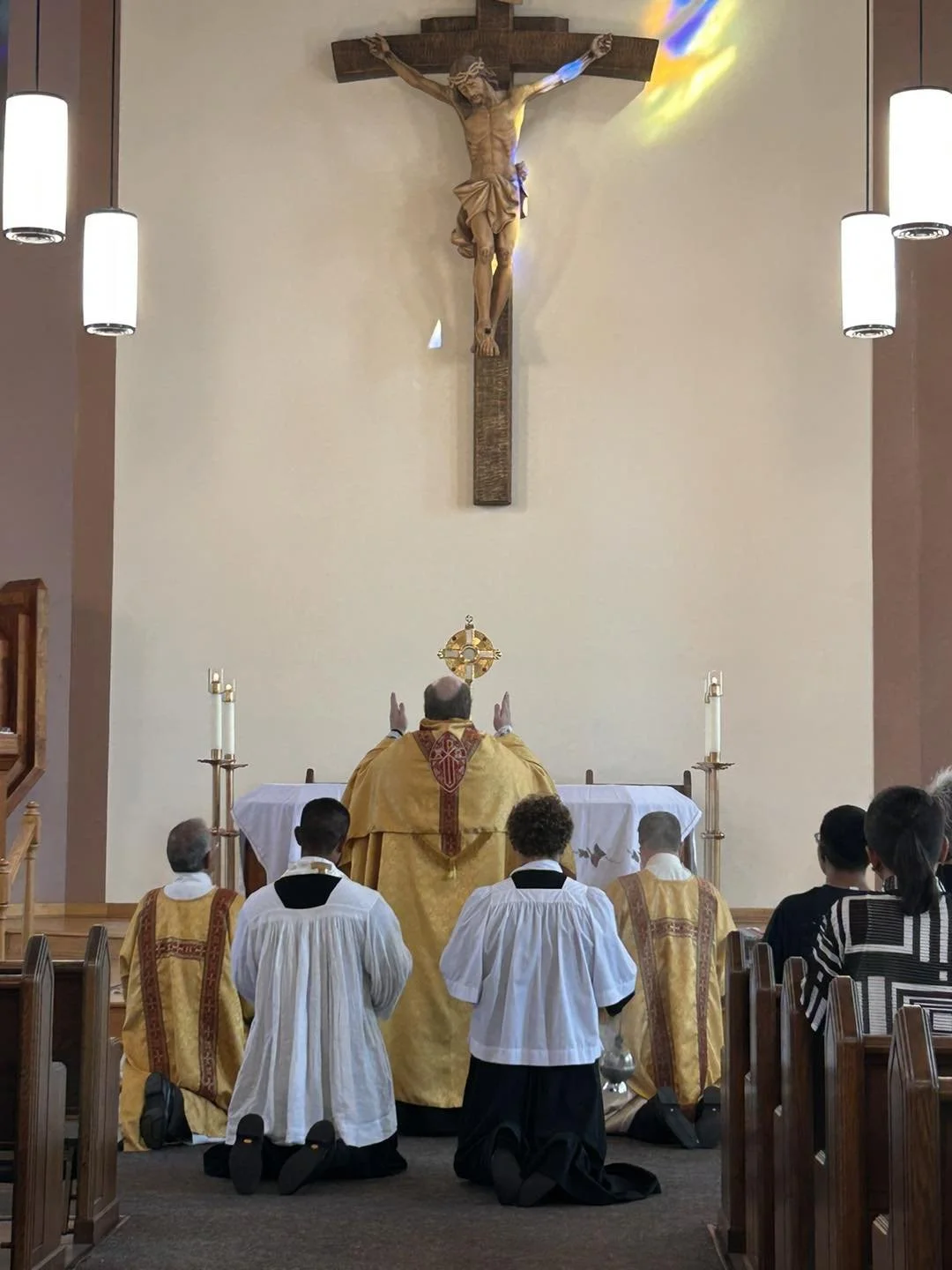
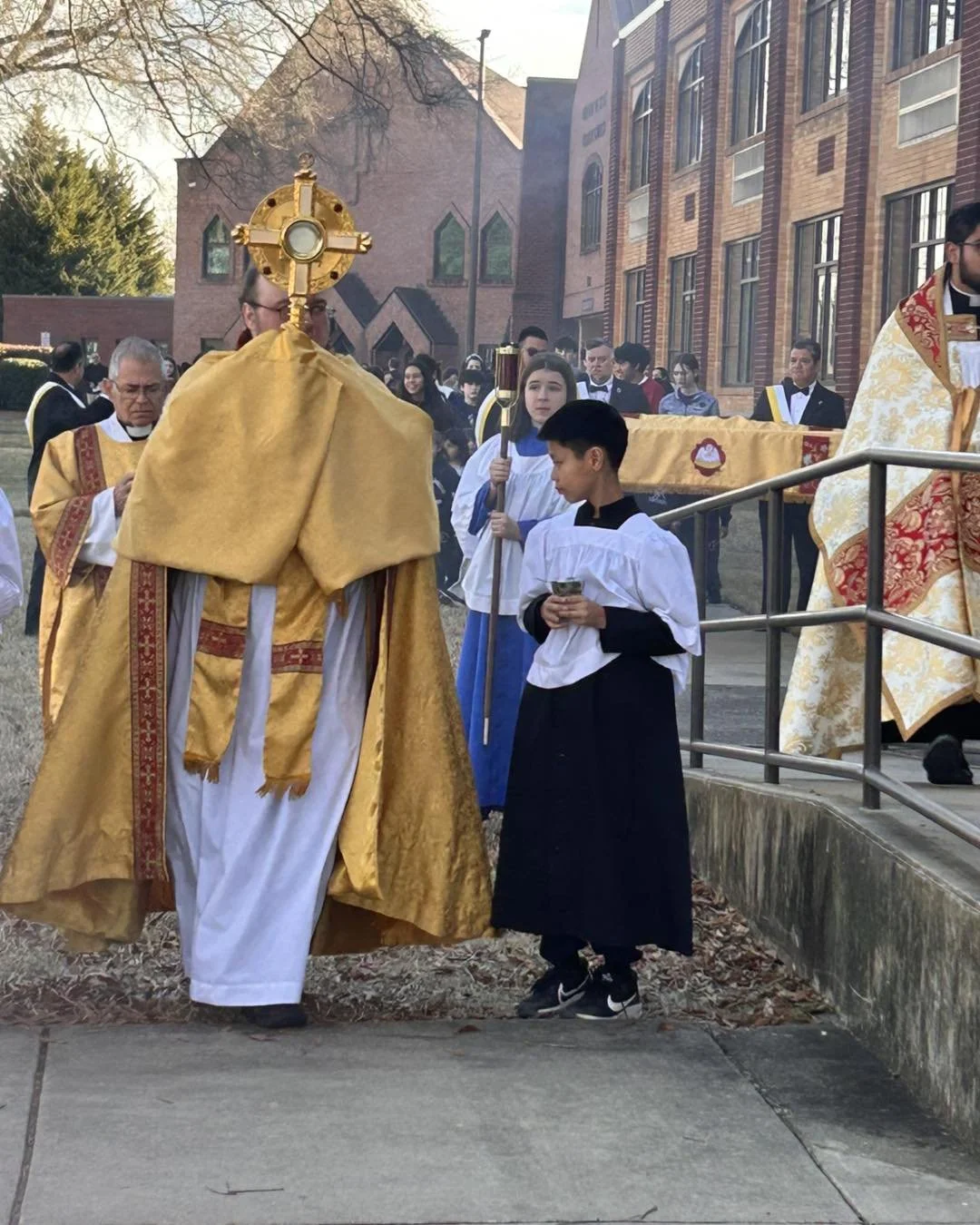
First and foremost is the Eucharist. Jesus Christ left his Apostles the memorial of his Passion and Death in the Most Holy Eucharist. He did not intend this to be a mere stage play, a drama to reenact on occasion to allow us to think nicely of him. Rather, he intended it to be a living memorial, one that we could participate in, a place of actual encounter with him. On the night he was betrayed, he took bread and gave thanks, broke the bread, and gave it to his disciples, whom he instituted to carry on this offering, saying “take and eat, this is my Body;” and likewise the chalice filled with wine, saying “take and drink, this is my Blood.” From the very beginning of Christianity, it has been believed that he who could speak all of creation into existence by a word, could also by a word transform simple bread and wine into his Body and Blood, and give them to us as our food for eternal life. It is only in the last quarter of the Church’s history that any serious doubts were ever raised about whether this was his intention. And those Apostles entrusted with the task of carrying on this memorial bestowed the power to do so, to act in the person of Christ and to offer his saving sacrifice, to successive generations of the priests of the Church, so that the Eucharist continues to be the source and summit of the Christian life. In short, one should be Catholic because present in the Catholic Church is the Body and Blood, Soul and Divinity, of Our Lord Jesus Christ.
Secondly is another simple and yet overwhelmingly important reason. G. K. Chesterton was asked why he converted to Catholicism, and he replied, with his characteristic sharp wit: “To get my sins forgiven.” Only two times in the entirety of Scripture does God breathe upon man. First is in Genesis, when God breathes life into Adam. Second is when Jesus breathes upon the Apostles and gives them the Holy Spirit, saying “Whose sins you forgive are forgiven; whose sins you retain are retained.” In the mind of God, to give life to man is placed on a par with giving man new life by releasing him from his sins. And just as the power to make present the Body and Blood of Christ was not lost with that first generation, so also the Apostles handed on the power they had been given to forgive sins, so that in every age, the assurance of salvation could come from this great sign of God’s love and mercy for us. We do not have to wonder if we are forgiven, we do not have to agonize endlessly, feeling that our sins could never possibly be taken away from us. The merits of
Christ’s saving sacrifice on the Cross are applied to us when we humble ourselves before the one appointed to act in his presence, confess our sins, and hear pronounced over us the forgiveness once and for all imparted on Calvary.
Why Come Back?
I have been a priest for over 9 years, and I have spent a significant portion of most days in that time hearing confessions. When people go to confession, they are encouraged to begin by telling the priest how long it has been since their last confession, so that the priest may advise them well. Usually people go every month or two, or about once a year, but on occasion we encounter people who haven’t been in several years, sometimes decades. I always ask them why they haven’t been in so long and what made them come back. Some of the answers as to why they haven’t been are a little surprising: most surprising is simply forgetting to do it and falling out of practice; sometimes this is because they were not taught that confession is something we must do regularly or something we should make a priority, sometimes it’s just as simple as “I forgot to go one month, and then ten years went by.”
But unsurprisingly, I hear people say that they stopped going because they have been hurt. Sometimes they have had bad experiences with a priest in confession. Sometimes they have suffered at the hands of an overzealous parishioner or staffer in a parish they used to go to long ago. Sometimes they have had bad experiences in their families that turn them off to the practice of religion in general. Sometimes, very tragically, they are the victims of the worst kinds of suffering that a human being can inflict upon another, and sometimes even more tragically at the hands of a priest. It is understandable that any number of wounds and painful experiences can cause us to leave the practice of the Catholic faith, of any organized religion, or even to doubt the existence of God.
And occasionally I run into people for whom the departure was not one of trauma, but of doctrine; a non-Catholic family member shows them some passage in the Bible that they are not well-equipped to interpret, and they wind up in another denomination. Childhood catechesis is often lacking, and occasionally even OCIA programs do not inoculate against the accusations that others will levy against Catholicism. Perhaps one was a practicing Catholic growing up who attended Catholic school and studied Catholic theology, but then went away to a secular university and found many other ideas more attractive, and got swept away in the current of worldviews that might be exciting, but do not truly satisfy.
Perhaps what I am saying describes you. Perhaps you relate to one or more of these scenarios I’ve described. And perhaps you’re reading this today because whatever road you’ve gone down leaves you feeling empty, like there’s something more, something that isn’t adding up and you want answers. If that is the case, I encourage you to reach out and come to us and ask questions. Many people are afraid, and perhaps even rightfully so, owing to past experience, of asking a priest about religious objections or doubts. But at Our Lady of Mercy, we have a deep love of sharing the truth with those who seek it, and we do not fear nor treat with anger those who have questions. Sometimes questions are worth exploring, and sometimes it leads us deeper into our faith.
Some people are afraid to return because of those past wounds. Our parish is a place of Mercy, and we are happy to help however we can. We will make the time to help you work through whatever it is that has caused you hurt, and to help you more fruitfully seek the way of Christ.
Ultimately this is why we should return to the Church. There are people in the Church who do bad things, hurtful things, even unspeakable evils. But we must not equate the Church, which is the Body of Christ, with those evils. Christ himself endured suffering because of the bad things that would be done in his name, especially by those who act in the person of Christ in the clergy. But in his suffering, he left us the means for our healing and peace. If we were to say simply why anyone should return to the Church, it is much the same reason as anyone should come to it to begin with: to receive mercy in the forgiveness of our sins and the grace of healing, and to encounter Christ as he comes to us in the sacrament of his Body and Blood. No matter how we are hurting and no matter why we have departed, no matter how long we have been away and no matter how far beyond his help we may feel, his mercy is infinite and it endures forever. Come back, even just to inquire, and we will strive to make this a place of Mercy for you.
— Father Cory, Pastor